By Herbert Vivian
HISTORICAL INTRODUCTION
Pride of the past – Roman times – Slav Colonisation – Patriarchal Government – Overrun by Bulgarian Tsar – Dynasty of Stefan Nemanja (1185) – Bulgarian Empire broken up – Dushan’s glorious empire – His death when advancing on Constantinople (1356) – Tsar Lazar – Battle of Kosovo (1389) – Servian ‘despots’ George Branković – Turkish rule preferred to Hungarian – Marko Kraljević – Servia under the Turks (1463-1804) – Prince Eugene’s raid – Massacre by Janissaries – Kara George supports the Sultan against them – Conflict with Turkey – Battle of Mishar ( 1806 ) – Settled dictatorship of Kara George – His cowardice and flight – Milosh Obrenović – He temporises with the Turks – Insurrection of 1815 – Turks concede local self-government – Death of Kara George – Milosh proclaimed Prince (1817) – Acknowledged by the Sultan (1830) – A benevolent despotism – Constitution of 1835 – Abdication of Milosh (1839) – Michael – Deposition and exile – Alexander Karageorgević – Deposition and exile – Restoration of Milosh (1859) – Michael’s second reign – Bombardment of Belgrade – Withdrawal of Turkish garrisons – Murder of Michael – Milan – War with Turkey – Treaty of Berlin – Servia a Kingdom – War with Bulgaria – Misfortunes of Milan – Abdication – The persecution of Queen Nathalie – Her expulsion – King Alexander’s state-strokes – An encouraging outlook
To understand Servia, it is imperative to master her history, which still remains, down to its remotest and minutest detail, a living reality to every man, woman, and child in the land. In England we have perhaps a lingering respect for Wellington and Nelson, but our national heroes of previous centuries arouse little more enthusiasm than the heroes of the latest novelette. In Servia, on the other hand, the humblest peasant takes as vivid and personal an interest in events which happened over five hundred years ago as we do in the exploits of a cricket team or a county council.
When I was travelling on a Save steamer one day , I noticed four peasants engaged in a discussion so vehe- mently animated that I was moved to inquire its pur- port . My companion returned with a smile on his face . 6 They are discussing , ‘ said he , ‘ whether Milosh Obilić , who killed Sultan Murad after the battle of Kosovo , was buried by the feet or the heads of the two Emperors ! ‘ And the subject evidently interested them deeply , for half an hour later they were still engrossed in it , with fervent gesticulations and flashing eyes . Nor was this by any means a solitary instance of the historical en- thusiasm which I was privileged to behold . Surely nowhere else in the world , unless it be in Ireland , may we find so patriotic a pride of the past .
Despite the loving interest which it evokes , the early history of Servia , down to the beginning of this century , is , however , dependent almost entirely upon legends . The authorities which might have been con- sulted , and more particularly the ecclesiastical docu- ments of the middle ages – the lives of S. Sava and S. Simeon , the chronicles of Archbishop Danilo and his successors have been left unpublished and almost undusted in the archives . Until some German drudge shall have collected all the dry bones of Servian history , and some man of genius shall have breathed into them the breath of life , we must be content to grope uncer- tainly through the dark ages .
The present kingdom is roughly coterminous with the Roman province of Mœsia Superior , which was inha- bited by Thracian tribes until , in the sixth and seventh centuries , bands of Servians , a Slav tribe from beyond the Carpathians , came as ravaging colonists . Favoured by the Byzantine Emperors , whose suzerainty they accepted , the Servians extended their dominion to the frontier of Macedonia and to the Adriatic , where they made Ragusa their capital . Actuated then as now by a spirit of decentralisation , each of these tribes was governed patriarchally by a zhupan or chief , and all the zhupans in Skupshtina1 assembled elected a Grand Zhupan or Prince . Then as now there was also a chronic anti- pathy between the Servians and the Bulgarians , who , though speaking a Slav dialect , are of pronounced Tartar type . In the middle of the ninth century we find re- corded the definite conversion of Servia to Christianity , and the first Servo – Bulgarian war . This war heralded a see – saw of Servian and Bulgarian supremacy in the Balkans . The Bulgarian Tsar Simeon ravaged Servia , reducing it to the condition of a vast , gloomy un- inhabited forest , and virtually blotting it out of the map . Presently the Byzantine Emperors helped Servia to raise her head again , for it was their policy to play one race off against the other , but before long they found their opportunity and swallowed up both Servia and Bulgaria . In the middle of the eleventh century Servia was freed by the same methods which secured her emancipation from the Turks in modern times . It is indeed remarkable how Servian history tends to repeat itself . Stefan Voislav initiated a guerilla warfare from the fastnesses of Montenegro , and his son , Michael Vois- lavić , was addressed as King by Pope Gregory VII . , who sent him a consecrated banner in the fond hope of alluring him to Romanism .
The greatness of mediæval Servia dates from the dynasty of Stefan Nemanja in the middle of the twelfth century . After annexing Bosnia in 1169 , he warred against the Byzantine Empire with varying success . At one time he was forced to crawl to the Emperor’s camp with bare feet and a halter round his neck , but in 1185 he proclaimed his independence , and received the Emperor’s daughter as a bride for his son . Such was his renown that Barbarossa visited him at Bel- grade . In 1195 he abdicated and retired to a cloister on Mount Athos . His eldest son Stefan , surnamed ‘ the first crowned , ‘ was then crowned King by another son , S. Sava , first Archbishop of Servia . Stefan was recognised by the Emperor Baldwin as ‘ by the grace of God , King of all Servian lands even to the sea – coast . ‘ The Servian monarchs then went on from strength to strength , and on June 28 , 1330 , Stefan Urosh broke up the Bulgarian Empire at the battle of Velbuzhd . His son Stefan , one of the few really strong statesmen who have illuminated history , hearing of a plot to oust him from the succession , rebelled and strangled his father . He was surnamed DUSHAN ,2 a name now held in su- preme honour by every Servian from its associations with the zenith of the imperial glory of the race . Throughout the peninsula he inspired a wild devotion which has not yet expired , and peasant mothers hushed their babies with the terror of his name . He was a great conqueror , a great lawgiver , the creator of a national church . By the treaty of 1340 he consolidated dominions extending from Belgrade to Janina and from the Adriatic to the Black Sea . The Byzantine Emperor was glad to conclude with him pobratimstvo , or blood – brotherhood . Dushan coquetted with the Pope to serve his own ends , but he was loyal to the national church , and never relaxed the article in his code which sent ‘ Latin heretics ‘ to labour in ‘ the deepest mines . ‘
Then , as now , the aspiration of Servia was to secure an outlet on the Ægean . Dushan extended his dominions to the Gulf of Volo and besieged Salonika . Bulgaria became his vassal ; Bosnia , Herzegovina , Albania , and Macedonia owned his sway . He took the style and title of ‘ Emperor of the Romans , Tsar of Macedonia , loving the Christ . ‘ The Byzantine Emperor , John Cantacuzene , grew alarmed , and embarked upon intrigues with the Ottoman Turks . Dushan saw that the only hope for Europe to stem the Turkish advance was to set up his own Empire at Constantinople . This was then , as now , the supreme aspiration of the Slav race , and on Michaelmas Day 1356 he set out with 80,000 men – a fabulous host in those days , and a respectable army as late as the campaigns of Buona- parte . Everything pointed to a mere military parade ; Adrianople fell , and the Servian vanguard was actually at the gates of Constantinople , when , on the 18th of December , Dushan , the invincible Tsar , suddenly succumbed , whether to fever or poison will never certainly be known .
The spirit of decentralisation which characterises Servian rule had induced him to divide up his Empire into provinces , each under a powerful chieftain . So long as his iron hand was there to keep ambitious subordinates in awe , all went well , but with the acces- sion of his son Urosh V. , a weak and unwarlike ruler , the magnificent Empire began to crumble like a house of cards . Thessaly declared independence ; Albania re- verted to her perennial lawlessness ; Bosnia was pro- claimed an independent kingdom ; Hungary re – took Belgrade ; and Bulgaria shook off her vassalage . The their own Patriarch until , in the middle of the eighteenth century , that dignitary was suspected of intrigues with Austria , and they were placed under the ecclesiastical jurisdiction of the Greek Patriarch at Constantinople . This was a blow even more severely felt than the loss of their political independence . Hitherto their own clergy had kept alive the spark of patriotism and ministered to their religious needs . Now a corrupt and alien priesthood was imposed , the new popes pay- ing large sums to be inducted , and looking upon their flocks as mere sources of reimbursement . And another result was to propagate a confused impression abroad that the Servian Church , and even the Servian people , were more or less Greek . To this day many people , who should know much better , are wont to speak of 6 the Greek Church ‘ when they mean the Orthodox Communion . It is an error akin to the misuse of the word Catholick for Roman Catholick .
No doubt much land was confiscated by the con- querors , but the peasantry were by no means reduced to servitude . It may have been a grievance that the taxes were largely spent outside the country , but they were certainly not excessive . The corvée , or forced labour , exacted during a few days in the year , was necessary for the maintenance of public works , and remains the law of the land to the present day ; and Christians were exempt from military service . The most convincing proof of the mildness of the Turkish rule is to be found in the rarity of disaffection . The people had invited the Turks , and continued to prefer their rods to the scorpions of Magyar domination . A few malcontents would take to the hills and turn hajduk from time to time , acquiring thereby a certain popularity among peasants , with whom the type of Robin Hood has always been a favourite in every land and every age . But Servia as a whole was scarcely more dis- affected under the Turks than she is under her native rulers to – day .
Whatever anti – Turkish sentiment subsisted was to be found among the Servians , who had migrated to Hungary , then the prime foe of the Porte . They were governed by their own vojvodes and ‘ despots , ‘ but were led out , as subjects of the Hungarian monarchy , to fight Hungary’s enemy . In the ranks of Prince Eugene they helped to take Belgrade , and with the armies of the Emperor Joseph II . they overran the greater part of Servia . Joseph II . , the monarch whose epitaph it is that he meant most and did least , ‘ had contracted an alliance with Russia or the perennial project of driving the Turks out of Europe . But his death and the French Revolution abruptly stifled the move- ment , and Servia , by the Treaty of Sistova ( August 4 , 1791 ) , relapsed once more under Ottoman rule . This was well for Servia , who would assuredly have fared worse under Austrian than Turkish taskmasters . I am not now indulging in conjecture , for I have only to point to the lot of the Croats to establish my contention . A foreign religion has been forced upon them ; they are denied most of the elements of individual liberty , and it is the constant endeavour of Austria – Hungary to crush out their national existence . Happy indeed is the lot of Servia that she was spared , by the failure of the Austrian project , to work out her own political salvation.
It is not , however , to be denied that the Austrian inroad did much to revive a warlike spirit and aspira- tions to independence among the Servians . The im- position of Greek ecclesiastics probably did more to and never uttering a word . When the Janissaries came to kill him , his experience as a hajduk stood him in good stead . He galloped off to the mountains , where he was sure of finding guns and a welcome among his old associates . His gang formed a nucleus for the uprising of Servia . In a few days the whole country was under arms – scythes and pitchforks for the most part – determined to sell every life at the dearest possible price . When he was offered the supreme command , he excused himself on the ground of his reckless and uncontainable temperament , but the people replied with one voice that so desperate a man was their ideal for so desperate an enterprise . In illustration of his impulsive violence may be mentioned his treatment of his relations . Like Dushan , he was a parricide . At the first whisper of the Austrian advent , in 1787 , he set out for the frontier with his pigs and his parents . His aged father refused to cross the Save , whereupon Kara George drew a pistol and shot him through the head . This act excited peculiar horror in Servia , where family ties are held in the utmost venera- tion ; but he pleaded that , if left behind , his father would probably have been impaled . On another occasion , when his mother tried to cheat him out of a bee – hive , he bonneted her with it and stalked off , regardless of the piercing cries which she emitted at every sting . Again , hearing his only brother accused as a gay Lothario , he seized him in a blind fury and hanged him over his own door – post with a bridle . Though he could not read or write , he proved an efficient administrator , his love of equity standing him in good stead . Sometimes , however , his impulses would lead him astray , as when he slew a faithful comrade at the whisper of a false charge . On such occasions he would shed tears like a baby , and invoke Heaven to curse his evil counsellors .
Most of his victories were due to sudden onsets When and the unbounded confidence of his followers . the word went round that Kara George was present , it seemed to them , and to his enemies also , that the issue was already decided . So soon as his victories were assured , he would return to the occupations of a simple peasant , digging , sowing , reaping , with the humblest . One day he damaged a Russian decoration while hooping a cask . He always wore the ordinary peasant’s dress – a loose short cloak , blue breeches , and a black fur cap ; when he was Prince , his daughter still carried her pail with the others to the village well .
But I am anticipating . The Servians , assembled in the forests of Shumadia , had as yet no thought of liberating their country or establishing a prince of their own . They chose Kara George to be ‘ Com- mander of the Servians , ‘ and , later on , ‘ Supreme Chief . ‘ But they were still fighting for their lives against the Janissaries in support of law and order as administered by the Sultan .
After defeating the Janissaries in pitched battle and capturing the fortress of Shabats , the Servians assumed the proportions of an army , and proceeded to invest Belgrade . With the spoils of their victories- Arab horses , gold and silver arms , sparkling trappings -they presented a brave show . The Sultan , Selim III . , realising the character of the movement , ordered the Pasha of Bosnia to assist it . The Pasha appeared in the Servian camp with 3,000 men , and the Janissaries saw there was nothing for it but to capitulate . The Servians were then thanked for their loyalty , and politely requested to return to their ploughs and herds . But having tasted blood and realised their power , they were now disinclined to disperse without guarantees against the recurrence of massacres . Kara George sent emissaries to coquet with Russia , and , turning a deaf ear to the admonitions of the Porte , continued opera- tions against the Janissaries , who still occupied a few fortified posts . He had not yet thrown off his allegi- ance to the Sultan , who was now incurring blame from the Old Turkish Party , and had been nicknamed the Giaour – Sultan for employing infidels against insubordi- nate believers . A mission was sent to the Porte to propose arrogant conditions on behalf of Kara George . Selim had been well disposed towards the Servians , but this step finally turned him against them . He clapped the delegates into prison and resolved on war .
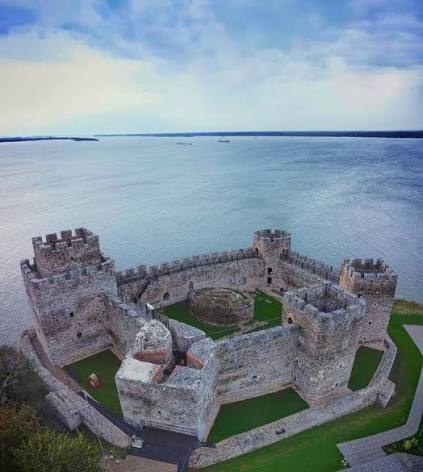
A few thousand mountaineers were now face to face with the whole force of the Ottoman Empire . The Pasha of Nish was sent forth with an army . He made very light of his foes , and boasted that all he needed was a few ropes with which to handcuff the Servian leaders , a few woollen caps and pocket – knives to propi- tiate the peasants . But he met with unexpected resist- ance from the Servian vanguard , and he had scarcely recovered from his surprise when he received the news that Kara George was upon him with 10,000 men . He turned tail at once and died of shame shortly after . But the Turks were not likely to accept their defeat , and Kara George , now master of all the interior of Servia , saw the necessity of preparing for mortal com- bat . He contrived to capture Smederovo before the news came that the Sultan had sent forth two other armies . 30,000 Bosnians crossed the river Kolubara , and the Servians disbanded at their approach ; 40,000 Turks appeared upon the Eastern frontier , and it seemed as if the hopes of Servia were to be dashed in their very inception .
But this was the hour of Kara George , which must ever immortalise him in the patriotic annals . With 1,500 men he opposed a guerilla warfare against the Bosnians . Knowing every inch of the country , his men enjoyed an enormous advantage despite the disparity of numbers . The Bosnians seemed to be fighting against invisible foes , and were being rapidly decimated . They concentrated their forces under the walls of Shabats , and accepted battle in the neighbour- ing plain of MISHAR ( August 4 , 1806 ) . Kara George seemed almost superhuman . His colossal figure towered above his comrades , his voice thundered like a hurricane , the sight of his prodigious valour nerved the most timorous . The Bosnian army was almost annihi- lated , only a few scattered fugitives being able to make good their escape across the frontier . Meanwhile the Turks in Eastern Servia were being harassed by the usual guerilla warfare , and when Kara George arrived upon the scene with his victorious troops , the Pasha offered terms of peace . In October 1806 , the Porte was ready to concede self – government to the Servians , provided her suzerainty were acknowledged and a tribute paid . When , however , the time came to ratify these terms , Russia was on the eve of war with Buona- parte , and the Sultan was encouraged to recall his offer , which now became a mere programme of Servian aspirations . Kara George resolved to continue the war , and on December 13 , 1806 , he captured Belgrade . Hideous scenes of massacre ensued . The garrison was cut to pieces despite promises of safe conduct , and even the poorest Moslem citizens could only save their lives by submitting to baptism .
By the end of 1807 a settled Servian government had been called into existence . A senate and a Skupshtina were appointed , but Kara George saw the necessity of ruling as a dictator , and had a short way with representative bodies which resisted his will . His soldiers received orders to point their muskets through the windows of the Parliament House , and the legislators soon saw the wisdom of reconsidering their decisions .
In the spring of 1809 , Kara George conceived the idea of annexing Bosnia and Herzegovina . He was impelled to this by the position of affairs in Turkey ; the murder of the Giaour – Sultan by the Janissaries had removed all hope of further tolerance from the Porte , and the outbreak of a Russo – Turkish war afforded a propitious opportunity for attack . But the ambition was premature , in view of the amount of work still necessary to consolidate the newly emancipated coun- try . At the outset , however , all seemed hopeful , and Kara George had established his head – quarters at Novi – Bazar , when he received intelligence of a disaster on the Eastern frontier , where dissensions had broken out among the Servian chieftains in face of the enemy . One leader refused to succour another in the hour of need , the alternative of exploding a powder – magazine and sacrificing a whole garrison was preferred to that of falling into the hands of the Turks , and the latter erected as a monument the famous Tower of Skulls at Nish , fragments of which remain standing to this day.3 Kara George hastened across Servia at an incredible speed , only to find the Servians in a panic . Such was his fury that he ordered his troops to fire upon their com- patriots . The condition of affairs was desperate . The Turks advanced to the centre of the country , spread- ing devastation in their path . Some of Kara George’s rival chiefs appealed to Russia . Meanwhile he sent messengers to Buonaparte , then installed as a victor at Schoenbrunn . But Buonaparte was the Sultan’s ally , and made no answer . Perhaps he was not even aware of the existence of Servia . The appeal to Russia had , however , proved successful , and with her help the Turks were driven back once more . Servia emerged from the war with her independence more secure and her territory extended .
But the position of Kara George had been weakened in the process . He was blamed for his neglect of Russia , and intrigues were fomented against his rule . His eyes turned towards Austria for protection . Russophil and Austrophil parties sprang into exist- ence in Servia – parties which , it may be , have not died out to this day . The Russophils desired the suzerainty of Russia , chiefly as a means of subverting the autocracy of Kara George . This autocracy he proceeded to consolidate with his habitual thorough- ness . By a sudden state – stroke he transformed the fantastic feudalism , which had hitherto obtained , into something very like an absolute monarchy . The episode was not without its humorous side , for he secured his three chief adversaries by forcing them to accept ministerial posts , which would keep them under constant supervision . By a series of prompt and de- cisive measures he soon brought the whole country under his authority . Among the suspects was a young man named Milosh Obrenović . Brought before a tri- bunal , he refused all concessions and coolly observed , ‘ I know that you will not condemn me , for I am beloved of the people . ‘ Kara George took a fancy to him and attached him to his person . In 1811 Kara George was Prince of the Servians , with practically unlimited power . Two years later he was a fugitive and an exile , branded with the stigma of cowardice .
The event which led up to this disaster was the Treaty of Bucharest , by which ( May 28 , 1812 ) Russia agreed that the Servians , receiving self – government ,4 should submit to Turkey . The historians speak of this treaty as a great betrayal , but it must be remembered that Kara George’s leanings towards Austria were notorious , and that Russia was on the eve of her life- struggle with Buonaparte . Kara George sent a deputa- tion to make terms with the Sultan , offering to pay tribute , accept a pasha and garrison at Belgrade , and allow all fortresses to be occupied by the Turks in time of war . He only stipulated for the home rule , which had been promised by the treaty . The Turks , however , interpreted the treaty as giving them a right to a permanent occupation of Servia and a complete disarma- ment of the Servians . Kara George offered to concede the occupation of all fortresses . The Turks were , how- ever , inflexible , and this time they did not repeat the mistake of despising the forces of Servia . The Grand Vizier took the field in person . Veljko , a former hajduk , bore the brunt of the first onslaught , and only succumbed because Kara George refused him the succour he demanded . Had Kara George been true to his duty and his traditions , the situation might yet have been saved . But , like many another hero , he seemed sud- denly to have lost his nerve . He hesitated ; he retreated ; none knew where he was . The whole country , in despair , took up the plaintive refrain5 of a national pesma , and exclaimed , Kara George , Kara George , where art thou ? ‘ Peerless as a guerilla leader , he had proved wanting when tested by the responsibilities of sovereignty . Taking with him all his portable trea- sures and burying the rest , he fled ignominiously into Austria , and abandoned his faithful people to their fate ( October 3 , 1813 ) .
Servia would undoubtedly have relapsed into servi- tude had it not been for the advent and marvellous exploits of MILOSH OBRENOVIĆ , who must accordingly be regarded as her real emancipator rather than Kara George . He was then thirty – three , the age at which men do great things if they are ever to do them . His father , Theodore , a poor farm labourer , had married the widow of a rich peasant named Obren . In his youth , Milosh tended the pigs of his father and of his half- brother , Milan , with whom he was out in the insurrec- tion of 1804. Milan died a wealthy man , and Milosh , succeeding to the estates , was recognised as an hospodar and took his brother’s name of Obrenović in addition to his own of Todorović , which has since been dropped by the dynasty .
When the news came of Kara George’s flight , the Servians dispersed , the vojvodes took the shortest cut to the frontier , and Milosh was urged to escape also . He replied that he could not leave his old mother , his wife and his children , to be sold like sheep . Returning 6 to the mountains he collected a few resolute men . But the case seemed so desperate that he was soon left almost alone . The Turks , however , had no wish to exterminate the Servians , and , recognising in Milosh an useful , auxiliary for the work of pacification , the Pasha of Belgrade appointed him Knjez . Milosh was a states- man as well as a warrior , and welcomed the opportunity of saving Servia . He went from village to village , carrying with him a message of hope . The Pasha became more and more conciliatory . This , ‘ quoth he , ‘ is my adopted son . He is wise and submissive to – day , but I must confess that more than once I have had to escape at a gallop to avoid his blows . Here , my son , ‘ he pursued , stretching out a scarred hand , ‘ see where your teeth have bitten . ‘ Milosh replied diplomatically , ‘ I will heal that hand by covering it with gold . ‘ The Pasha then gave him authority over three districts and made him rich presents . It was the moment for craft rather than force . Milosh accepted every mark of favour with gratitude , and even helped the Turks to stifle premature insurrections . This was true patriotism , for the hero was only biding his time .
When the hour for action struck , he was the first to give the signal and lead on to victory . Finding that the Pasha’s promises of amnesty could no longer be relied upon , Milosh galloped off to join the hajdutsi among the mountains of Rudnik . On Palm Sunday , 1815 , he raised the standard of insurrection at Takovo , which is accordingly known as the cradle of Servian liberty . The oak tree is still shown where he issued his call to arms , and the name of Takovo has been enshrined in the heart of every Servian patriot . Arms , which had been hidden away in the forests and moun- tain caverns , were brought out , and Milosh was soon at the head of a formidable array . The old guerilla tactics were adopted , women , children and monks trans- forming themselves into sharpshooters from behind every rock . After a series of successful surprises , the insurgents obtained a signal victory on the river Kolubara and captured several cannon . These suc- cesses attracted the vojvodes , who had taken refuge in Austria , and soon Milosh was able to march upon Pozharevats . A desperate hand – to – hand struggle en- sued . When ammunition failed , the Servians fought with their daggers , even with their nails and teeth . Pozharevats was taken after prodigies of heroism , and the whole of the Shumadia was soon in the hands of the insurgents . The Turks were allowed to depart with the honours of war , and Milosh signalised himself by his chivalrous generosity . The Turks themselves bore testimony to the care which he lavished upon their wounded .
It was not , however , to be expected that the Sultan would submit to the loss of Servia without a struggle . An army was at once sent out from Roumelia and Albania , another from Bosnia . Milosh defeated the Pasha of Bosnia , gave him back his arms and insignia , and even added princely gifts . Russia , now relieved from the menace of Buonaparte , protested that the Turkish invasion was an infraction of the Treaty of Bucharest , and the general of the second Turkish army hastened to make proposals of peace . Milosh visited the Turkish camp , and it is significant of the chivalry of Saladin’s successors that he was allowed to depart in safety , for his death would have terminated the whole movement abruptly . Just as the leaders of former Servian insurrections had claimed to fight , not against the Sultan , but against his enemies the Janissaries , so now that a partition of Turkey by the European Powers would only serve to plunge Servia into deeper subjec- tion . A Russo – Turkish war was concluded ( September 14 , 1829 ) by the Treaty of Adrianople , which made no mention of Servia , and a Russian diplomatist remarked at the time , Eh ! if Servia had nothing to desire , she would forget both her subjection to Turkey and her obligations to Russia ‘ -a remark which serves to illus- trate Russian policy in the Balkans throughout this century . On the conclusion of the war , Milosh sent a deputation to the Sultan and obtained the confirmation of his dignity as Prince of the Servians . This was formally enunciated by a hatti-sherif on the 30th of Sep- tember 1830 , and Russia was far from satisfied . You have now an hereditary Prince , ‘ said the Tsar with irony to the envoys of Milosh , be pleased to accept my compliments . ‘
Russia now embarked upon a policy of intrigue . She procured the return of discontented emigrants , and , when Turkey disputed the interpretation of the hatti-sherif of 1830 , and claimed the fortress of Belgrade , Russia arbitrated in her favour . This hatti-sherif had prescribed that Milosh should administer the affairs of Servia by and with the consent of an assembly of Servian notables , which presents to us the strange spectacle of the Sultan imposing constitutional methods , and the elected Prince of Servia standing out for abso- lutism . This absolutism Milosh maintained during the next nine years . He raised and abased his officials quite arbitrarily , and punished with the bastinado those who displeased him . But a chronic conspiracy was fomented . A certain Vuchić cherished ambitions of murdering or ousting Milosh and reigning in his stead , and nurtured disaffection by giving to the people promises ( which he never meant to perform ) of im- munity from the various duties of citizenship . Vuchić summoned the militia in Milosh’s name , and in 1835 contrived a formidable insurrection , which extorted a constitution conferring democratic institutions , for which Servia was wholly unfitted . Its effect was sud- denly to plant a Western bureaucracy amid the forests of Shumadia . Austria , Turkey , and Russia protested against it , and it soon proved unworkable , so that Milosh , as a wise prince , was compelled to disregard it . At this time Colonel Hodges was accredited as British Consul , and sought to counteract Russian intrigues , but Russian diplomacy carried the day , and , by what has been called ‘ a masterpiece of Russo – Turkish liberalism , ‘ a council was established , practically setting aside Milosh’s rule and governing in his stead . The Prince of Servia was now virtually a prisoner in his own konak . The Senate seized the reins of government , and Milosh , receiving assurances from the Russian Consul that he would thereby secure the succession for his son , abdicated on the 13th of June , 1839. This state- stroke was the work of the enemies of Servia , and Milosh left the country amid the tears of his subjects .
At the time of his departure , his eldest son , Milan , was incurably ill , and , when proclaimed as Milan Obrenović II . , was not informed of what had taken place . He often asked for his father , only to be told that Milosh was travelling . He died on the Sth of July , 1839 , without knowing of the dignity which had been conferred upon him .
The Regents appointed during Milan’s brief reign maintained that the hereditary right belonged only to Milosh’s eldest son , and therefore expired with Milan . But this unpatriotic endeavour was frustrated , and love of Austria , but because he perceived that the establishment of Hungarian home rule would be a standing menace to Servia . His prudent neutrality during the Crimean war was disconcerting to Russia , but earned the approval of Europe and the guarantee of Servian privileges by the Treaty of Paris in 1856 . He was , however , accused of nepotism and despotism , nearly all the chief posts of State being filled by members of his wife’s family , and no Skupshtina being summoned for ten years . On the discovery , in October 1857 , of a plot in which several senators were implicated , he sought to suppress the Senate . The conspirators were tortured and condemned to death , but , on the Sultan’s intervention , were merely exhibited in chains in the streets of Belgrade and sent into exile . The people began to remember that , if Milosh had been a despot , he had at least been benevolent and patriotic , and discontent against Karageorgević grew daily more widespread . At length , in November 1858 , he was constrained to call a Skupshtina , which drew up a grand remonstrance and summoned him to abdicate . He took refuge in the Turkish fortress , whereupon ( December 23 , 1858 ) the Skupshtina passed a vote deposing him and recalling Milosh .
There was something pathetic and dramatic about the return of the venerable Liberator at the age of seventy – eight , after nearly twenty years of exile , during which he had never ceased to dream of Servia and a Servian Empire . His restoration was received with frenzied joy by the whole people , whom he proceeded to govern once more in his old patriarchal way . It is related how , shortly before his death , being annoyed by the sight of some ill – kept fields near Banja , he sent for the owner and said angrily , ‘ If ever I see thy domain in so disgraceful a condition again , I will yoke thee to thine own plough , and use the whip to thee myself ‘ -a threat he would not have hesitated for an instant to carry out . Resolute as was his government at home , he exhibited no less resolution in the conduct of foreign affairs . He kept Austria at arm’s length , proclaimed the heredity of the throne , and insisted on the Turkish occupation being restricted to the treaty – fortresses . He died on the 26th of September , 1860 , having accom- plished more for Servia even during the short period of his second reign than Karageorgević did during sixteen years . So long as Servia shall endure , she must burn incense to the memory of Milosh , the creator and saviour of her independence ; and if the restoration of her old Empire ever becomes possible , it can only be by adherence to his lofty traditions of patriotism and resolute government .
His son Michael reascended the throne with many Western notions , which he had maintained even through the Odysseys of exile . But he had the wisdom to perceive that the nostrums of democracy must not be too hastily introduced into the system of a young State . He curtailed the privileges of the Senate , which had become a standing menace to the Crown ; and he only summoned the Skupshtina every three years , allowing it neither to originate legislation nor to tamper with finance . He went on to establish conscription and organise a standing army , which at once placed his country on a very different footing when facing other States . Perhaps , however , his greatest success , and one forming a fitting complement to the work of his father , the Liberator , was the expulsion of the Turks from the garrisons which they still occupied .
A pretext for raising the question was afforded by the bombardment of Belgrade on the 17th of June , 1862 . I have gone very carefully into the evidence , but must confess my inability to apportion the blame for this unhappy occurrence . No doubt there were faults on both sides , and the presence of a Moslem garrison in a Christian city could not but afford a standing menace of disorder . The conflict arose in much the same way as frontier conflicts usually do arise at moments of tension . Two Servian boys and two Turkish soldiers disputed who should first draw water from a well near the rival police – stations . They came to blows , and the boys were killed in the scuffle . Servian gendarmes rushed out to arrest the soldiers , but were killed by a discharge of musketry from the Turkish police – station . Fighting then became general , the whole population was soon under arms , and the Turkish quarter was pillaged . The Consuls of the Powers intervened , and an armistice was concluded , but next day the garrison took alarm and bombarded the town for a period of five hours . Peace was only restored by the intervention of the British and French Consuls , who risked their lives by surrendering themselves as hostages to the contending parties . The significant fact is that a great number of persons seem to have known beforehand that something was about to take place . The Turks may have hoped to prevent the Servians from joining Montenegro against them , and the Servians may have contemplated the possibility of seizing the fortress . It was not , however , until 1867 , and only then as the result of diplomatic action , that the Turkish evacuation of Servia was finally conceded , and that the hated garrisons at length took their departure . Meanwhile Karageorgević had not tamely accepted his deposition , and various plots were contrived by his partisans . These culminated , on the 10th of June , 1868 , in the murder of Michael among the woods of Top- chider . How far Karageorgević was implicated it is difficult to pronounce , but the deed was certainly the work of his partisans . It was only by prompt measures on the part of those in authority that civil war was averted , and that Michael’s nearest relative was pro- claimed Prince Milan Obrenović IV .
Milan being only fourteen years of age , three Regents were appointed , including M. Ristić , until the Prince came of age in 1872. His reign was marked by two wars and many public scandals . In 1876 Russia , preparing the ground for a campaign by which she hoped to acquire Constantinople , the hereditary object of her dreams , instigated a rising in Bosnia , and prevailed upon Servia and Montenegro to attack the Porte . General Chernajev and large numbers of Russian officers were sent to command the Servians , who fought with their traditional gallantry , but the Turks obtained a decisive victory at Aleksinats , and Servia was forced to come to terms in March 1877. The war had been under- taken under the impression that Russia would imme- diately take part in it , and great resentment was felt when she held aloof . When at last Russia did declare war , Servia accordingly refused to resume hostilities until it was clear that Russia meant business . The previous campaign had not been without its lessons , and the Servian armies , now under native officers , succeeded in capturing Nish , Pirot , and Vranja , which Milan was per- mitted to retain on the conclusion of peace . The Russian proposals at San Stefano further alienated Servia , and the cession of Bosnia to Austria by the Treaty of Berlin aroused widespread indignation . The complete inde- pendence of Servia was now , however , recognised by Europe and , in March 1882 , Milan assumed the title of King .
We have seen how Bulgaria and Servia were tradi- tional foes in the Middle Ages , rising and falling at each other’s expense like the two ends of a see – saw . It will therefore be readily understood what resentment was aroused throughout Servia when the Treaty of Berlin re – established a Bulgarian State . There was constant friction on the frontier from the outset , and when Bulgaria suddenly annexed Eastern Roumelia in 1885 , the whole Servian nation insisted upon war . exchange of rifle – shots between Servian and Bulgarian patrols afforded a pretext , and on the 13th of November Milan declared war . Everyone anticipated a mere military parade , and the Servians took Vidin and Tsaribrod without difficulty . But on the 18th of November , after desperate fighting , the Bulgarians were completely victorious at Slivnitsa , and Servia lay at their mercy . A curious incident of the battle was the simultaneous flight of the two Sovereigns , Prince Alexander galloping back headlong to Sofia and King Milan towards Belgrade , each under the impression that his army was routed . After Slivnitsa the Servians continued to fight well , but their most desperate efforts were in vain , and the Bulgarians crossed the frontier on the 26th of November . Austria now intervened , and on the 3rd of March , 1886 , peace was signed at Bucharest on the basis of the status quo ante . A strange corollary of the war was the speedy loss of their thrones by each of the contending Sovereigns . Russia was incensed against Prince Alexander for his annexation of Eastern Roumelia , and against King Milan for having shown , since 1876 , a disinclination to remain her catspaw . Prince Alexander was kidnapped in the night of the 21st of August , 1886 , and carried off to Russia . On his return at the end of the month he displayed the same cowardice which had induced him to flee to Sofia at the first rumour of a reverse during the war . He sent an abject telegram to the Tsar , and abdicated on the 6th of September .
Milan , too , seemed pursued by a relentless fate . Insurrectionary movements occurred spasmodically in various parts of the land and were only put down by the energy and vigilance of Government . The partisans of the Karageorgević family became once more a menace to the dynasty . The widow of an officer named Marković attempted to murder Milan during a thanksgiving service in the cathedral on his return from abroad . Dissensions with the Queen provoked a scandal which resounded throughout Europe . And in March 1889 , the king suddenly abdicated in favour of his son ALEXANDER .
The story of Queen Nathalie is too recent and too painful to be enlarged upon in these pages ; but in justice to that noble and virtuous lady I may be per- mitted to allude to a few of the heavy trials which she endured with so much dignity and heroism .
King Milan went out of his way to advertise the catholicity of his flirtations , carrying huge bouquets with his own royal hands through the streets of Belgrade to the house of an adventuress , before whose doors he would station his carriage for hours , even when he was not within . The whole town mocked him and resented the gratuitous insult to the Queen . In 1888 , when she was at Wiesbaden with her son , and before any divorce proceedings had been initiated , Milan applied to the German Emperor , and carried off the Prince by force . Returning to Belgrade in 1889 , on the abdication of Milan , she was exposed to a miserable persecution . During a period of fourteen months she was only permitted to see her son seven times , unless by looking out when his carriage drove past her windows . Complaining of this privation to the Regent Ristić , she received an insulting letter which a chronicler has described as ‘ worthy of a carter.’6 He reprimanded her for occupying too prominent a place in church , jeered at her preference for the French language , and indulged in other taunts of the most brutal kind . Not content with this , he instigated every sort of calumny in the press ; apocryphal documents were ascribed to her ; and her son’s aides – de – camp were ordered to take no notice of her in the streets .
Perhaps the shabbiest behaviour was that of the Metropolitan Michael , Archbishop of Belgrade . The Queen had appealed to the Holy Synod , of which he was head , to pronounce authoritatively upon the validity of her divorce . Two bishops were sent to urge her not to press this point , but she persisted , and accordingly received from the Synod ( June 16 , 1890 ) a solemn act declaring the divorce to have been illegal and irregular . Milan , hearing rumours of this , terrified Michael , who thereupon wrote another document declaring the divorce to be an accomplished fact , not to be reopened by the Synod . At the same time he wrote to the Queen begging her not to be alarmed by anything she might hear , as the act transmitted to her remained in force . It was not to be supposed that the existence of two such documents could long remain a secret , and it was not long before the Metropolitan found himself in the midst of an hornets ‘ nest . The situation would have been ex- cessively comic , if it had not concerned so tragical a subject . The Metropolitan performed prodigies of shuffling , but was at his wits ‘ end in face of the angry calls for an explanation with which Milan , Nathalie , the Regents , and the Ministers besieged him . At length , driven into a corner , he resorted to a supreme quibble , and coolly asserted that there had been no contradiction , as one act expressed the opinion of the Synod and the other was a decision not to take action upon that opinion . By this time everyone was disgusted with the Metropolitan , and the Queen endeavoured to lodge an appeal with the Skupshtina , but her intention was frustrated by a piece of sharp practice . At last , wearied and broken down by vain attempts to obtain justice and to see her beloved son , the Queen had made up her mind to leave Belgrade , when M. Ristić suddenly brought his persecutions to a climax by ordering her expulsion . The manner in which this extreme measure was carried out almost recalls the excesses of the French Revolution . A rude mercenary forced his way with a number of soldiers into the apartments of her Majesty , and , taking out his watch , curtly gave her ten minutes to accompany him to the frontier , refusing even the necessary privacy for final preparations . This high- handed act produced a riot , for the Queen has always been beloved by her subjects ; the troops fired upon the people , and several persons were butchered before this disgraceful act was complete . Since the state – stroke of April , 1893 , by which King Alexander proclaimed himself of age , the Queen has been permitted to return to Belgrade , where she now enjoys the society of her son and is adored by all his subjects . Let us pray that all her bitter trials and tribulations may now be at an end , and that she may long be spared to enjoy the unalloyed happiness which her saintly virtues have deserved .
The King’s state – strokes , by which he proclaimed himself of age and ( May 1894 ) revived the Constitution of 1869 , have exhibited him as a wise and resolute statesman at an extraordinarily early age . Since her emancipation , Servia has grown in wisdom and stature , and gone from strength to strength ; and under the sturdy rule of her modern Dushan , there need be no limit to her aspirations . All her Sovereigns during this century have been either murdered or driven to abdicate , and it is obvious that only a strong man can hope to direct her destinies peacefully aright . This strong man has at length been vouchsafed to her in the person of her present Monarch , whose career all admirers of authority and order must watch with confidence and admiration . Zhiveo Kralj Aleksander ! Zhiveo Srpski Narod !
- Now applied to the Chamber of Deputies . ↩︎
- Dusha means a soul . A Servian mother or lover would use the term ‘ Dushane ! ‘ ( ‘ my soul ‘ or ‘ my darling ‘ ) , and the great Servian ruler retained through life the endearing name which had been given him in boyhood . ↩︎
- See p . 268 . [here it will be in part XIII, which is chapter XII of the book] ↩︎
- Article VIII. ↩︎
- The vila shrieks from the summit of Rudnik above the Jasenitsa , the slender stream . She calls George Petrović at Topola in the plain : ” Foolish George Petrović , where art thou to – day ? Would thou wert nowhere ! If thou drinkest wine in the tavern , may it run out of thee in wounds ! If thou art taking thy ease with thy wife , may she be widowed . Dost thou not see ( ah ! would that thou wert deprived of sight ) that the Turks have invaded thy fatherland ? ” ‘ ↩︎
- Her sublime magnanimity is illustrated by a passage in her reply : Vous êtes franchement mon ennemi . La différence entre vous et moi est : que ni je n’ai été ni je ne serai votre ennemie , et que le jour où vous viendrez me tendre la main , je vous tendrai loyalement la mienne . ‘ That day has since come , and she has been as good as her word , extending forgiveness to her persecutor now that he is friendless and fallen . ↩︎